


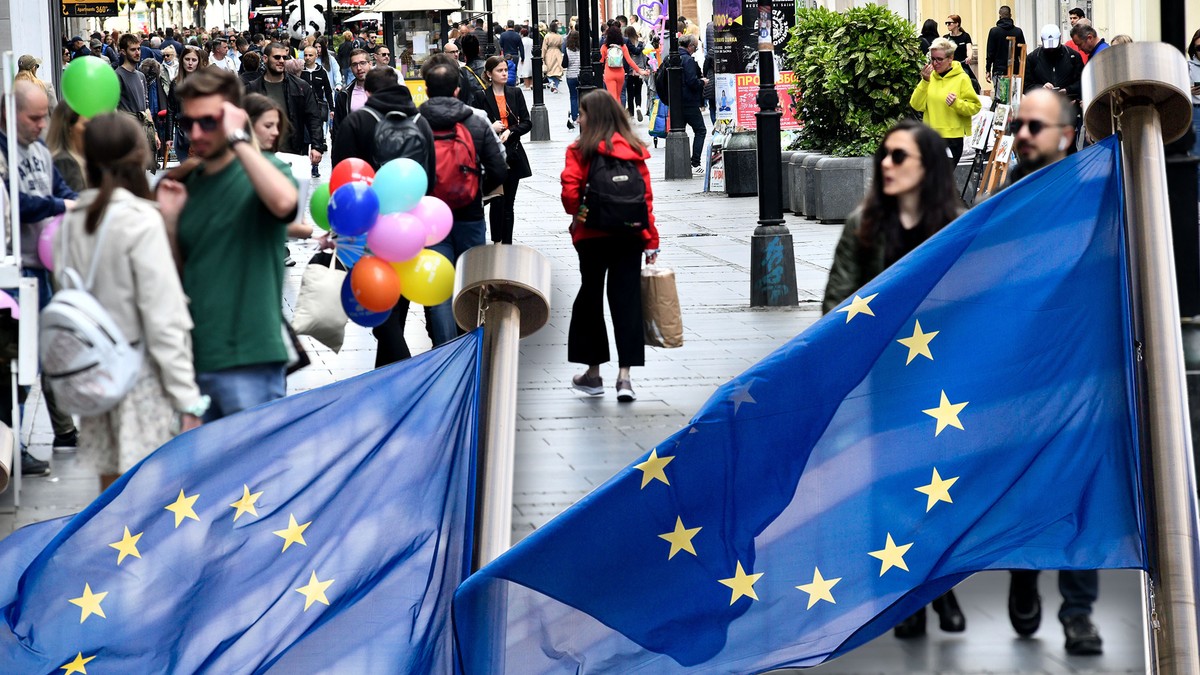
Five European Union member states have proposed a gradual and systematic integration of Western Balkan countries into the EU's single market, even before full membership, based on alignment with EU legislation and the rule of law. This approach aims to maintain the momentum of expansion, accelerate reforms, and counter the influence of third-party countries.
The document, co-signed by Austria, the Czech Republic, Italy, Slovakia, and Slovenia, outlines a phased sectoral integration as a stepping stone towards full European integration. It should proceed when a candidate demonstrates a high level of alignment with EU legal standards in the relevant sector and shows strong and credible application of the rule of law.
The document also states that such an approach should include protective measures in case a country shows backward movement after gaining access to the EU market.
Highlighting the delays in reforms by candidate and potential candidate countries, the document assesses that gradual integration has shown to be a useful instrument in this regard but that the process has been slow and complex.
To maintain the momentum of expansion and enhance European integration, strong and attractive incentives are needed to motivate both citizens and political leaders in candidate countries to implement irreversible reforms. An approach to the single European market based on merit, if necessary step by step, represents such an incentive, accelerating economic integration and regulatory convergence, while maintaining the long-term perspective of full EU membership, as stated in the document published by table.media.
"An Approach that Strengthens the Market"
Within the four freedoms of the internal market, systematic sectoral integration of candidates into the EU single market could cover areas such as full implementation of green corridors, accelerated integration into the energy market and electricity market, and integration into the single digital market.
Transport and logistics sectors, integration into EU competitiveness and industry strategies, EU policies on critical raw materials, implementation of the Agreement on Conformity Assessment and Acceptance of Industrial Products (ACAA), and expansion of authorized economic operator (AEO) status for candidates are also mentioned. Additionally, the mobility of youth would be encouraged.
This approach would expand and strengthen the single market, contributing to the geo-economic significance and strategic autonomy of the EU, while bringing candidates closer and helping to counter third-party influence. The document was presented by the Austrian Minister of Foreign Affairs, Beate Majl-Rajzinger, at the meeting of the Friends of the Western Balkans and Western Balkans Six group in Bratislava last week.
EU Commission Called to Propose Concrete Sectoral Integration
The document calls on the European Commission to propose concrete sectoral integrations into the single European market, including clear procedures for assessing whether a candidate is ready for such an integration.


Comments