


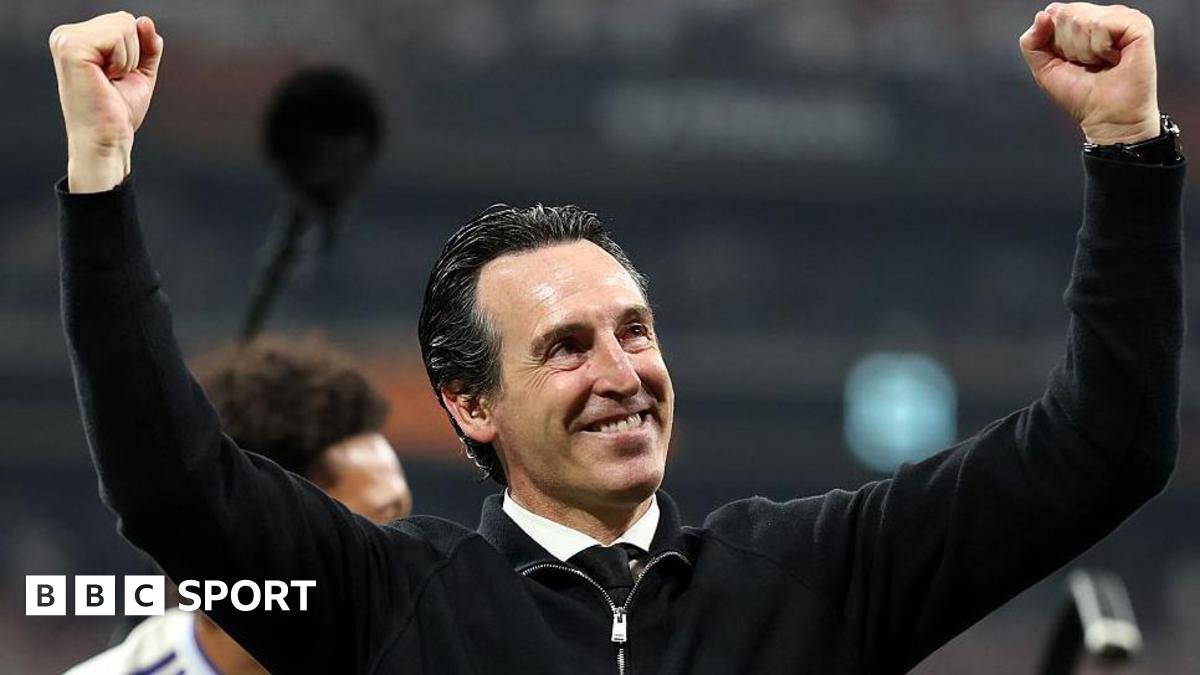
Picture Unai Emery loading up a chess app on his phone to play against strangers - under his own name.
That is just one of the methods the meticulous Aston Villa boss uses to hone the mental discipline required at football's highest level. And Emery is certainly the Europa League's grand master, having clinched the trophy yet again with Villa's 3-0 win over Freiburg on Wednesday - for the club's first piece of silverware in 30 years, and his fifth triumph in the competition.
Achievements and Background
Emery, 54, previously guided Sevilla to Europa League glory three years in a row - in 2014, 2015, and 2016 - before sealing his fourth success with Villarreal in 2021. After five years, the Spaniard has been reunited with the trophy - and moved level with Carlo Ancelotti, Jose Mourinho, and Giovanni Trapattoni on the list of managers with most major European prizes (five).
Emery's Routine and Focus
Emery manages to find time during his days to open his chess app and play three-minute online games against all-comers. The idea of a Premier League manager doing so under his own name might sound strange, but it is true. He believes you have to be ready for anything - and cannot afford to switch off.
But it's not just chess that catches Emery's attention. He's also partial to watching a lecture. Even at 2am. His particular interests are people who explain the world in new ways. Scientists, thinkers, whoever can expand his frame of reference. Another 2am activity is watching any level of football on his iPad. As one example, take Racing Santander - who have just been promoted to Spain's top flight. Not a Champions League giant or a rival, but that doesn't stop Emery from studying them. It's his way of relaxing.
Emery says nobody works harder than him. He isn't boasting, he is just explaining his methodology. He focuses on body shape in training, tactics, physical details, forcing players to dedicate 70% of their time to football. He has spoken about his parents and the sense of responsibility they embedded in him. Whatever he does, he does completely. Meeting a target is, of course, a professional outcome - but also the conclusion of a responsibility he takes personally. To sustain that, he has learned to protect his concentration fiercely. He is able to ignore any external noise.
What next when the campaign ends? He'll go to his hometown of Hondarribia or favourite holiday destination Mallorca to walk by the sea and meet friends that have nothing to do with football. He will spend time with his mum. He might even join her for a leisurely walk by the seaside.

Comments