


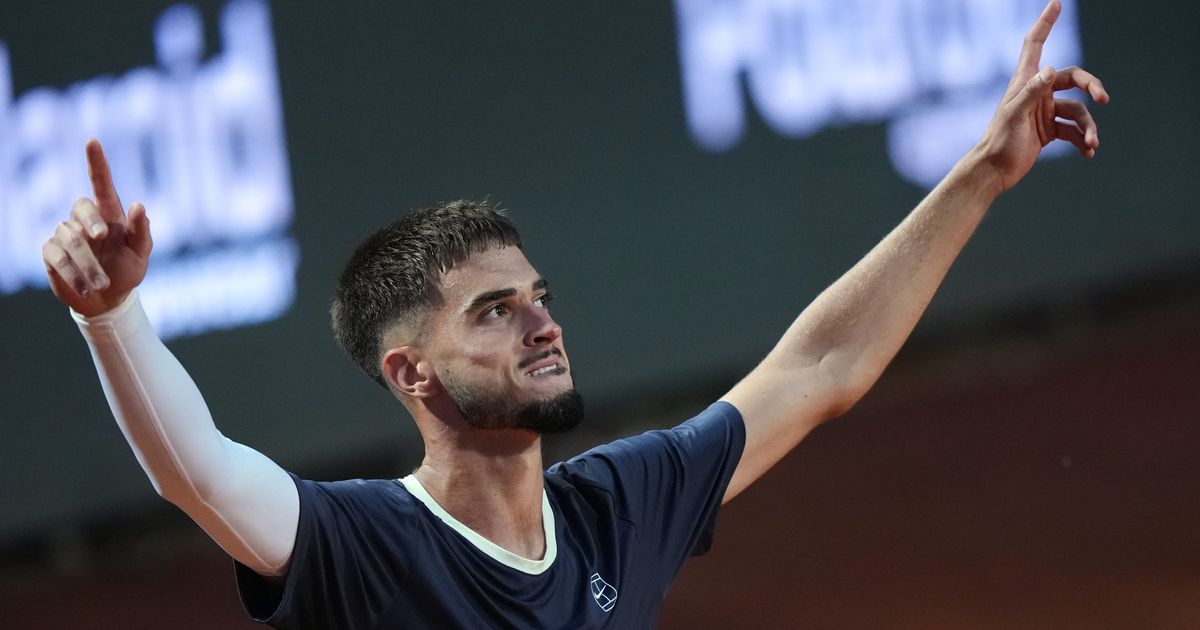
The clay courts of Roland Garros witnessed another Croatian breakthrough as Dino Prižmić continued his remarkable spring campaign with a commanding first-round victory over American qualifier Michael Zheng. The 25-year-old secured a straight-sets win, 6-1, 6-1, 6-3, demonstrating the heavy topspin and baseline consistency that has become his trademark on red dirt. Fans packed into Court Philippe-Chatrier and surrounding venues noted how quickly he established control, turning what could have been a competitive opening match into a masterclass of modern clay-court tennis.
Riding the Spring Clay Surge
Prižmić’s path to Paris has been defined by steady improvement and high-profile wins. After reaching a Challenger final in Monza in early April, the Croatian successfully navigated qualifying draws for the ATP Masters 1000 tournaments in Madrid and Rome. His five-match winning streak across those events included a stunning second-round upset over Novak Đoković in the Italian capital, a result that shifted momentum firmly in his favor. Now ranked 71st in the world, Prižmić has transformed his game into a formidable weapon on slow surfaces, contrasting sharply with Zheng’s 146th ranking and less decorated clay record.
The match itself reflected Prižmić’s tactical maturity. He dictated rallies early, neutralizing Zheng’s aggressive forehand and forcing errors on both ends. While the American showed flashes of resilience in the final set, Prižmić’s physical conditioning and shot placement proved decisive. This victory marks another step in his rapid ascent, positioning him among the younger generation of Balkan players making waves on the European clay circuit. His progress mirrors a broader trend in the region, where national federations have invested heavily in youth development and surface-specific coaching programs.
Navigating the Parisian Draw
The second round presents a different kind of challenge. Prižmić will face the survivor of a clash between Brazilian veteran João Fonseca and French-Serbian hopeful Luka Pavlović, who is set to make his Grand Slam debut on home soil. Pavlović’s dual background has drawn attention from fans across the region, adding a layer of local interest to the upcoming matchup. Should Prižmić advance, the draw hints at a potential third-round encounter with Đoković, who has historically used the Parisian tournament to fine-tune his rhythm ahead of later summer events.
Croatian tennis has long produced specialists for hard and grass surfaces, but Prižmić’s recent trajectory suggests a growing depth in the country’s clay-court talent pool. His ability to sustain long rallies, read opponent positioning, and maintain composure under pressure reflects the technical coaching standards now common in regional academies. As the tournament progresses, all eyes will remain on how he adapts to the changing court speeds and the increased physical demands of a two-week marathon in Paris.

Comments