


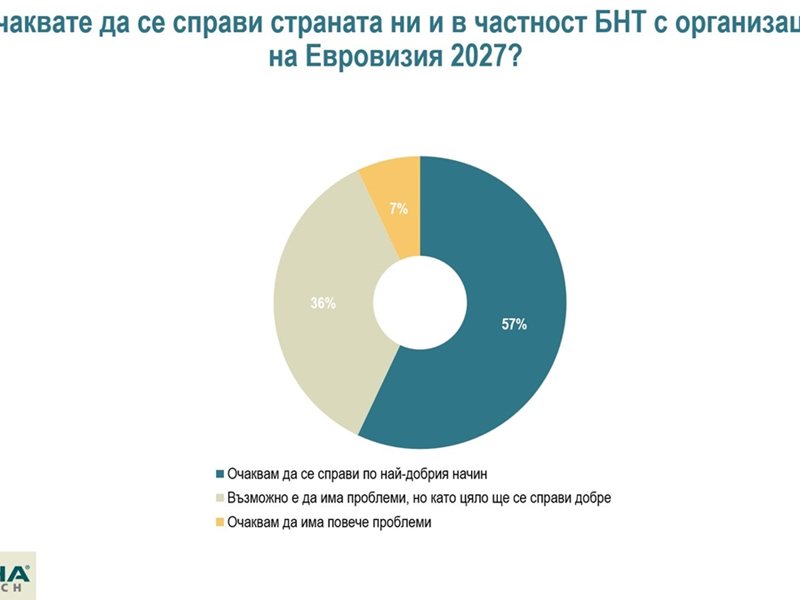
A recent survey by Alfa Research reveals that 57% of Bulgarians believe their country and the Bulgarian National Television (BNT) will excel in organizing the Eurovision Song Contest in 2027. Additionally, 59% of respondents favor Sofia as the host city. The survey highlights a positive public sentiment following Bulgaria's success with Darina's "Bangarang."
Public Confidence in Bulgaria's Organizational Capabilities
The survey indicates a strong belief that Bulgaria will successfully host Eurovision. A significant majority of 57% believe both the country and BNT will present themselves in the best possible light. 36% expect some challenges but overall believe the event will be well-executed, while 7% are skeptical, believing problems will outweigh successes. This level of optimism is rarely seen in Bulgaria and provides hope for continued positive public sentiment.
Candidate Cities for Eurovision 2027
The survey also sheds light on the competition between Bulgarian cities to host Eurovision. Sofia leads with 59% of respondents favoring it, nearly three times the support for its closest rival, Burgas, which received 15%. Plovdiv and Varna received less support, indicating a clear preference for Sofia as the host city.
Expected Benefits of Hosting Eurovision
Bulgarians view hosting Eurovision as beneficial in two primary ways: enhancing the country's image and increasing visibility in Europe and the world (72%) and boosting tourism (63%). Additional benefits include supporting local businesses (39%), improving infrastructure in the host city (33%), and uplifting local artists and creators (31%).
The road to hosting Eurovision is long, and much work remains to be done to fulfill the current expectations of euphoria. However, the most significant positive effect is already evident: the ability to shift from a negative to a positive outlook on our country, which is essential for any success. As a society, we must maintain this positive sentiment.


считаю, что София лучший выбор для Евровизии. надеюсь, что всё сложится хорошо и мы покажем себя с лучшей стороны.