


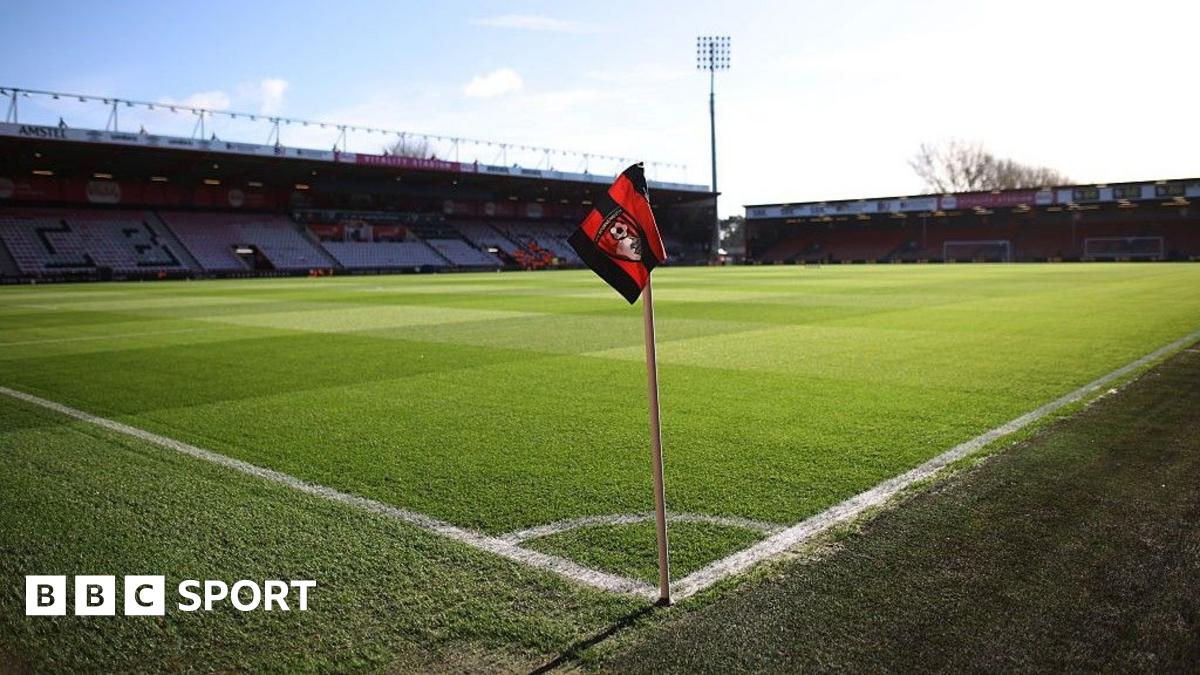
Bournemouth have qualified for European football for the first time in their history, and next season they will host a minimum of four European matches at the Vitality Stadium.
The Cherries will feature in the league phase of either the Champions League or Europa League, with the exact competition to be decided on the final day of the Premier League season. At a capacity of around 11,300 people, the club's stadium is the smallest in the Premier League by more than 6,000 seats, meaning that it would rank among the smallest stadiums in recent history to host Champions League matches should they qualify for the tournament.
Bournemouth have confirmed to BBC Sport that they have the necessary UEFA licence to host league phase matches in either competition. However, in cases where teams’ home stadiums do not meet UEFA's requirements, they often use nearby grounds that do meet UEFA's standards to fulfill fixtures. For instance, during the 2024-25 season, The New Saints played their home Conference League fixtures at Shrewsbury Town's ground. A season earlier, Union Berlin had to play their Champions League matches at Hertha Berlin's stadium for the same reason.
UEFA's Category 4 Requirements
All stadia are given a rating between category one and category four by UEFA, with four being the highest. From the play-off qualifying round onwards of the Champions League, Europa League, and Conference League, venues must have category four status. The Vitality Stadium meets this requirement with its 8,000+ spectator capacity.
The list of requirements to pass category four status is extensive, but includes:
- A pitch of dimensions 105mx68m with an automated under-soil pitch irrigation system and pitch heating or cover.
- Benches for both teams consisting of 20 seats and at least 4m from the touchline with an unobstructed view of the entire field of play.
- A minimum of 8,000 seats for spectators, with at least 5% being made available to away fans.
- Stadia must be able to provide for 80% of spectators being male with one seated toilet and sink per 250 male spectators and one urinal per 125 male spectators.
- Stadia must be able to provide for 25% of spectators being female with one seated toilet and sink per 120 female spectators in the home sector and one seated toilet and sink per 80 female spectators in the visiting sector.
- All public entrances must be equipped with turnstiles and an electronic ticket system designed to prevent counterfeit tickets with one turnstile for every 660 spectators.
- At least 100 VIP seats, 150 parking spaces for VIPs, other guests, and staff, and at least 60 seats for working media inside the stadium.
- At least two broadcast studio rooms.
Adapting for Compliance
It is not unusual for clubs to have to make adaptations ahead of a season in which they require upgraded stadium facilities when qualifying for a new competition. Ahead of their first ever Premier League season, Luton Town were forced to make significant upgrades to their stadium to meet the league's requirements.
Will Bournemouth face similar challenges, or will they be ready for the big stage? The answer will become clear as the season progresses.



Comments