


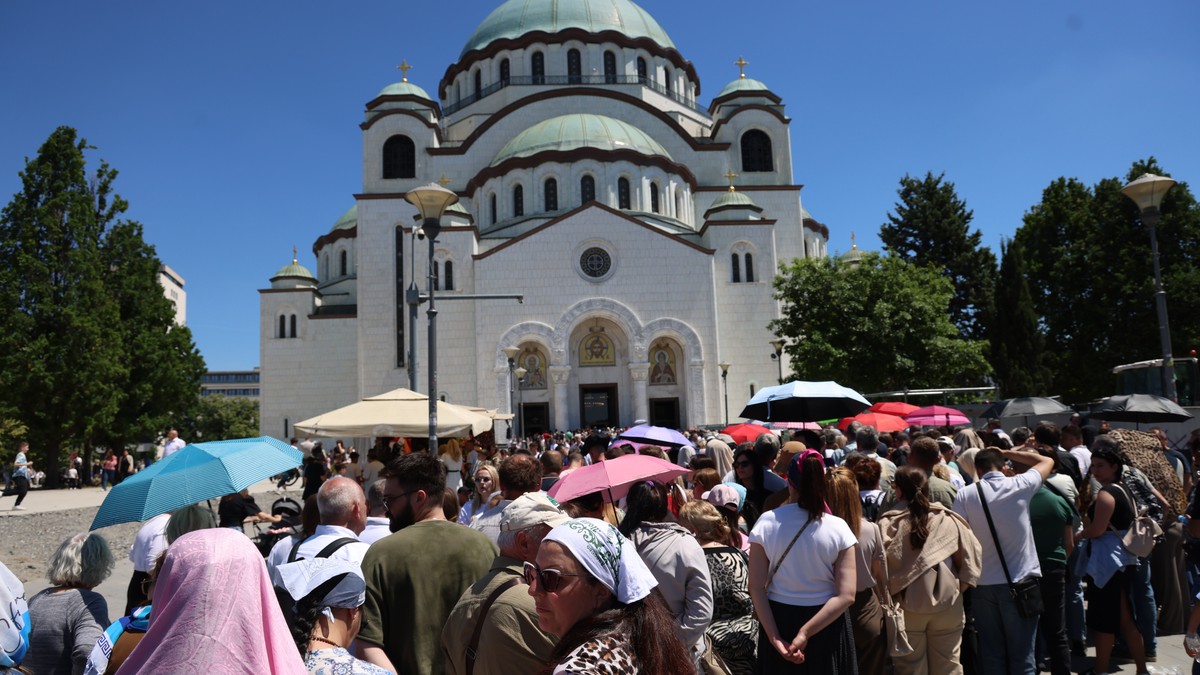
Long lines of faithful believers stretched across the streets of Belgrade early Tuesday morning, with some waiting up to six hours to step inside the Church of Saint Sava. The pilgrimage centers on the Holy Belt of the Mother of God, one of the most venerated relics in Eastern Christianity. After more than six centuries away from Serbian soil, the sacred artifact has drawn thousands to the capital’s main Orthodox cathedral.
A Historic Return to the Balkans
The relic traces its origins to the first century, with tradition holding that the Virgin Mary wove the belt from camel leather. It is believed she kept it close during pivotal moments of her life, including the announcement of Christ’s birth and his crucifixion. For centuries, the belt resided in monasteries across Greece, the Middle East, and Russia before its recent arrival in Serbia. Its presence marks a rare convergence of faith and history, drawing attention from religious leaders and laypeople alike. Orthodox communities across the region view the display as a spiritual milestone, reinforcing shared heritage that transcends modern political borders.
Pilgrimage Across Borders
Queues spilled from the cathedral plaza along Nebojšina Street, wrapping around intersections and stretching well past Hadži Milentijeva Street. The crowd reflected a broad cross-section of society: grandparents in traditional attire stood beside university students, while families balanced umbrellas against the midday sun. Many travelers arrived before dawn, with some reporting they queued from 5 a.m. to secure a place near the entrance. Others made the journey from neighboring cities, the Republika Srpska, and even Canada, underscoring the relic’s reach beyond the immediate region.
Security and church volunteers coordinated the flow of visitors, maintaining a calm and orderly atmosphere despite the scale of the turnout. Those who finally entered described the experience as deeply moving, with many saying the long wait was entirely worthwhile. The Holy Belt will remain accessible for public veneration until 29 May. Organizers anticipate continued high attendance over the coming weeks, as religious calendars and holiday weekends typically drive additional pilgrim traffic to major Serbian cathedrals. The event highlights how ancient traditions continue to shape public life in the Balkans, blending devotion, history, and community in a single shared space.


редови су били тотално лудости данас нгл. чекао сам преко пет сати и вреди је свака секунда. стварно импресивно како се људи организују и чувају мир...