


A Legacy Etched in Stone
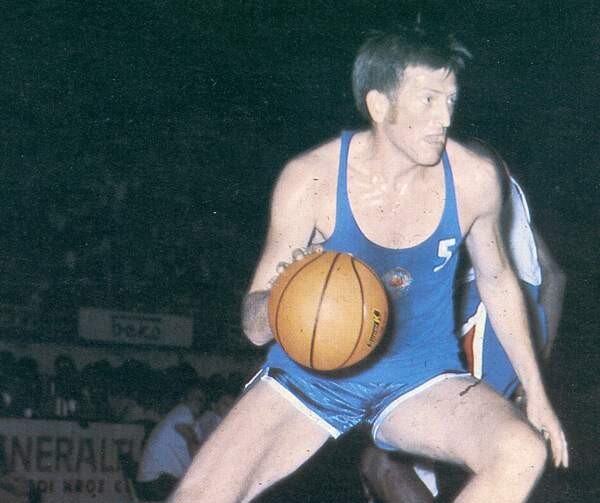
The date is etched in sorrow, but the legend remains immortal. Tuesday, June 2nd, marks 57 years since the tragic passing of Radivoj Korać. At 11:00 AM, friends, family, and fellow believers in the beautiful game will gather in the Alley of the Greats at New Belgrade Cemetery to pay their final respects to the man known simply as Žućka. He was the first from these lands to shatter the boundaries of basketball on a global scale, transforming the court into a stage for destiny.
His life was cut short at just 30 years old in a car accident near Semizovac, 12 kilometers from Sarajevo, following a showcase match between the Yugoslav national team and a selection from Bosnia and Herzegovina. Yet, death could not silence the roar of the crowd that followed him everywhere. The club KK Radivoj Korać, founded in his neighborhood on June 4, 1972, proudly guards his family legacy, ensuring his spirit lives on in every dribble and every shot.
Numbers That Defied Logic
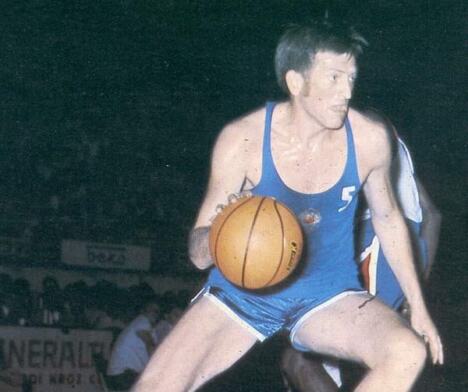
Did he play basketball? No, he conducted symphonies of points. Debuting for the Yugoslav national team in 1958, Korać became a force of nature. He played in four European Championships, securing two silvers and a bronze, and was the top scorer in three of them. He donned the national jersey for two World Championships, adding two more silver medals to his collection, and competed in five Balkaniads.
His Olympic silver medal from Mexico City in 1968 shines brightly, but it was his raw scoring power that left jaws on the floor. In 157 international matches, he amassed 3,153 points, averaging a staggering 20.1 points per game—a number that sounded like fantasy in that era. Some records cite over 160 caps and 3,200 points, but the truth remains the same: he was unstoppable. His legendary 99-point performance for OKK Beograd against Alvik of Stockholm in 1965 stands as a testament to his scoring prowess, a number that still echoes through the halls of basketball history.
The Trophy That Bears His Name
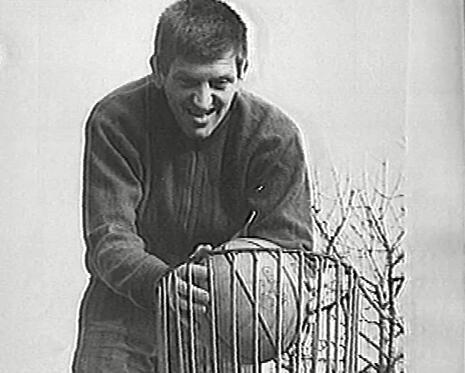
His influence extended far beyond the court. In 1971, FIBA launched the Radivoj Korać Cup in his honor, a European competition where matches were never played on June 2nd out of respect. The trophy awarded to the winner was dubbed "Žućka’s Left Hand." Though the European competition ceased in 2002, the Basketball Federation of Serbia and Montenegro renamed the national cup the Radivoj Korać Cup, keeping his name alive in every domestic battle.
Korać was not just an athlete; he was a gentleman scholar, a global ambassador for his nation. He was the first sportsman buried in the Alley of the Greats, a fitting final resting place for a giant. Every June 2nd, the community gathers, laying flowers and memories, proving that while the player may have left the court, his game never ends.


žućka zaista bio neponovljiv tip, 99 poena u jednom meču je ludilo rn... ko može da se takmiči s tim?