


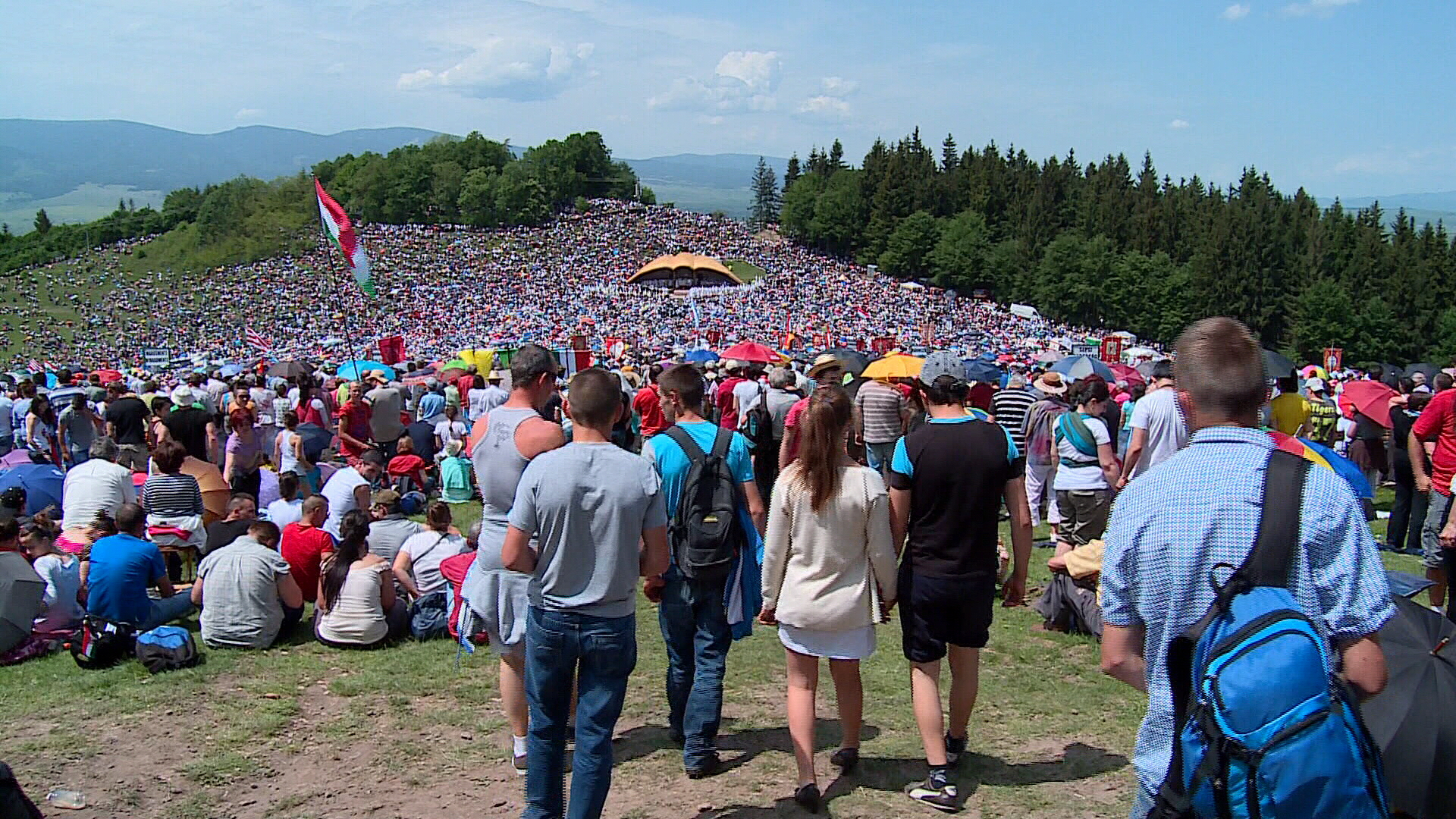
Approximately 300,000 faithful gathered in Șumuleu Ciuc this Pentecost for what organizers describe as the largest Roman Catholic pilgrimage in southeastern Europe. The massive procession, spanning more than 1,000 kilometers across multiple countries, culminated in an open-air Holy Mass that filled the town’s historic grounds. The event, held in Harghita County, underscores the enduring power of Marian devotion in the Carpathian region and highlights the growing reach of the Via Mariae spiritual network.
A Cross-Border Spiritual Route
The pilgrimage follows the Via Mariae, a modern network of Catholic walking routes inspired by the Camino de Santiago. Launched to connect historic Marian shrines across southeastern Europe, the path draws participants from Romania, Hungary, Serbia, Bulgaria, and beyond. Devotees walk, cycle, or travel by organized transport to reach the final destination, where centuries of tradition converge. The 2026 gathering marked a record turnout, reflecting both renewed religious enthusiasm and improved cross-border mobility for Eastern European believers.
Historically, the site has hosted major religious festivals since the mid-18th century, when a local miracle sparked widespread veneration. Over time, the event evolved from a regional observance into a continental gathering. Clergy and lay organizers coordinate weekly processions along designated trails, culminating in the Pentecost celebration. The route’s design encourages quiet reflection, community service, and cultural exchange, aligning spiritual practice with contemporary themes of regional unity. Participants often carry personal intentions, leaving them at designated prayer stations along the trail.
Logistics, Local Economy, and Enduring Tradition
Hosting three hundred thousand visitors places immense pressure on local infrastructure. Municipal authorities deploy thousands of volunteers, coordinate shuttle services, and work with regional police to manage crowd safety. Temporary medical stations, food distribution points, and waste management systems operate around the clock. Local businesses report a significant seasonal boost, with guesthouses, restaurants, and transport providers operating at full capacity well before the main weekend.
Search accommodation in Miercurea Ciuc on Booking.com →
Beyond the numbers, the pilgrimage remains deeply personal for attendees. Many describe the journey as a reset for mind and spirit, citing the combination of physical effort, communal prayer, and Carpathian scenery as uniquely restorative. Religious leaders emphasize that the event strengthens intergenerational ties and preserves Latin liturgical traditions in a predominantly Eastern Orthodox region. As climate and travel patterns shift, organizers are adapting route conditions and transport options to keep the pilgrimage accessible for future generations. The gathering stands as a testament to how faith continues to bridge borders in an increasingly fragmented continent.

Comments